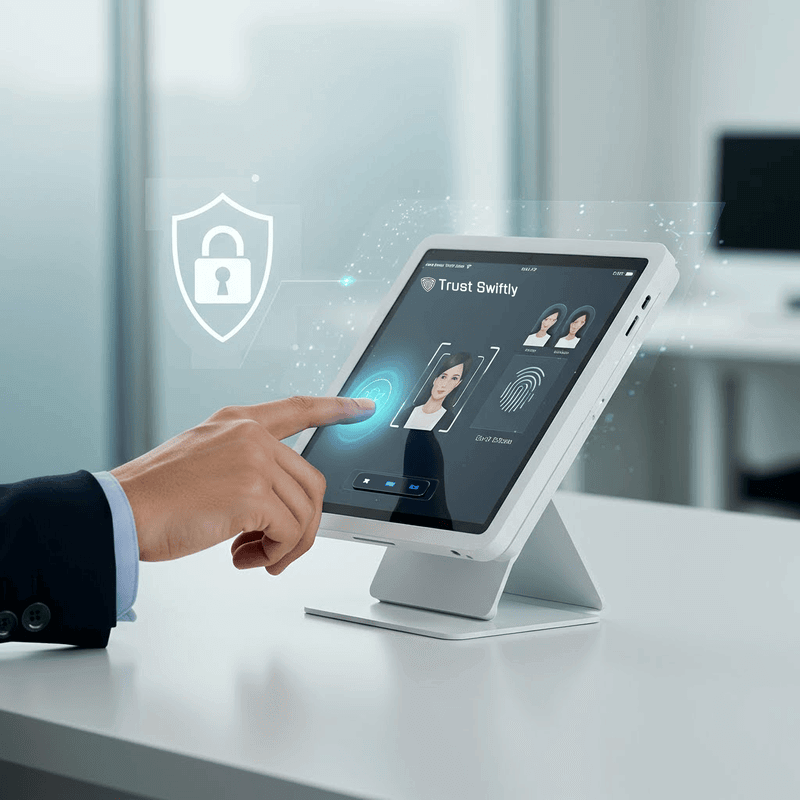
Why People Prefer To Use Nist 800-63-4 Ial3 Compliance Now?
The NIST SP 800-63-4 IAL3 guidelines offer agencies increased flexibility in choosing assurance levels based on business and security needs, such as recognizing phishing-resistant authentication options like FIDO2 passkeys and mobile driver's licenses as well as officially integrating user-controlled wallets into the federation model.
These changes constitute a dramatic modernization of digital identity guidelines, necessitating modern identity platforms with continuous context-aware verification to meet their requirements and ensure scalability.
IAL3 Compliance
As more government agencies, businesses, and services transition online, the need to verify a user's identity has become more pressing. To meet this need, the National Institute of Standards and Technology (NIST) has devised Identity Assurance Levels as a standardized identity proofing process. Mitek assists organizations meet these stringent standards by providing secure digital identity verification compliant with NIST guidelines.
NIST has established Identity Assurance Level 3 as their highest Identity Assurance Level, requiring in-person, on-site identity proofing with stringent document validation and biometric comparison to ensure claimed identities match those being presented thereby decreasing risks associated with impersonation or fraud.
IAL3 also implements liveness detection to deter identity fraud by verifying whether or not a person is alive during proofing process, especially for high-risk applications like healthcare and critical infrastructure applications where identity errors could have serious repercussions. IAL3 further requires CSPs to preferentially collect attributes backed up with evidence rather than self-asserted data, and provide safeguards against reuse of collected information for unlawful uses.
IAL3 FedRAMP High Identity Proofing
Reaching fedramp high identity proofing High status is an attainable goal for technology and cloud companies, yet many struggle to meet its one small requirement: Identity Assurance Level 3 (IAL3) verification. Failure to do so opens the door for fraud and unapproved access.
Contrary to IAL2, which only requires visual verification checks, IAL3 requires hardware-anchored security. This is achieved using superior evidence and biometric binding; using cryptographic chips within ID documents for digital signature verification coupled with live face-to-face video capture for facial recognition offers an effective yet user-friendly system.
IAL3 also incorporates a human-in-the-loop component, mandating trained representatives oversee each nist ial3 verification session in real time. This feature, coupled with the stringency of its requirements, ensures that every identity is fully validated and securely authenticated - whether they have root access or financial authority over critical systems. IAL3 gives businesses and executives confidence when managing these essential systems.
IAL3 Identity Verification Software
NIST provides identity assurance levels (IALs), which indicate how confident they are that a claimed identity exists in real life and is associated with it. Their standards also cover federated assurance levels (FALs) which link multiple identities to one authenticator, thus decreasing authentication requirements while increasing convenience.
At its highest IAL level, identity proofing requires on-site attended biometric verification combined with rigorous document and image analysis. This involves matching enrollee biometrics with images from specific identity documents while restricting social engineering techniques like wearing realistic silicone masks in order to impersonate an applicant.
Trustswiftly's platform for high-assurance ial3 identity verification software and comparison processes with an easy user experience provides this expensive, time-consuming method with maximum assurance for applications such as accessing government data or healthcare services. Thanks to innovations like face authentication software and facial recognition technologies, the IAL3 protocol is now more accessible than ever - for instance face recognition makes accessing government databases or healthcare services simpler than ever!
IAL3 Kiosks
An IAL3 kiosk allows users to directly connect with a CSP from home, office or public places of work - saving both time and travel costs. Furthermore, this option offers greater scalability, cost reductions and deployment flexibility for deployments.
Leading nist 800-63-4 ial3 compliance verify identity documents directly with the source, eliminating synthetic identities. Furthermore, advanced liveness detection ensures enrollees are present while biometric binding strengthens security against SIM swaps and MFA bypasses.
To deploy a self-service kiosk with IAL3 capability, customers can purchase and customize a turnkey kit or use their own kiosk to load Trust Swiftly's no code app or single page. After connecting remotely to their kiosk device via Trust Swiftly's remote access feature, customers can conduct video proofing sessions, capture evidence and perform liveness checks remotely. Furthermore, mobile agents can transfer sessions for further verifications from another location (not included in IAL3), providing what's known as Supervised Remote Identity Proofing services to mobile customers in real-time.